

By Jason Spaull, owner of Coastal Asbestos Removal. Jason has been in the asbestos industry for over 30 years and has worked through the 2011 Brisbane floods, the 2022 Lismore floods and many hail events. Last updated: 22 November 2026.
Short answer: Whether asbestos insurance covers removal depends on your policy and what caused the damage, so start with the policy documents. If a storm or flood damaged an older home, assume debris may contain asbestos and leave it alone. Your insurer or builder will often want a make-safe, a test result from a NATA-accredited laboratory, a removal scope, then a clearance certificate.
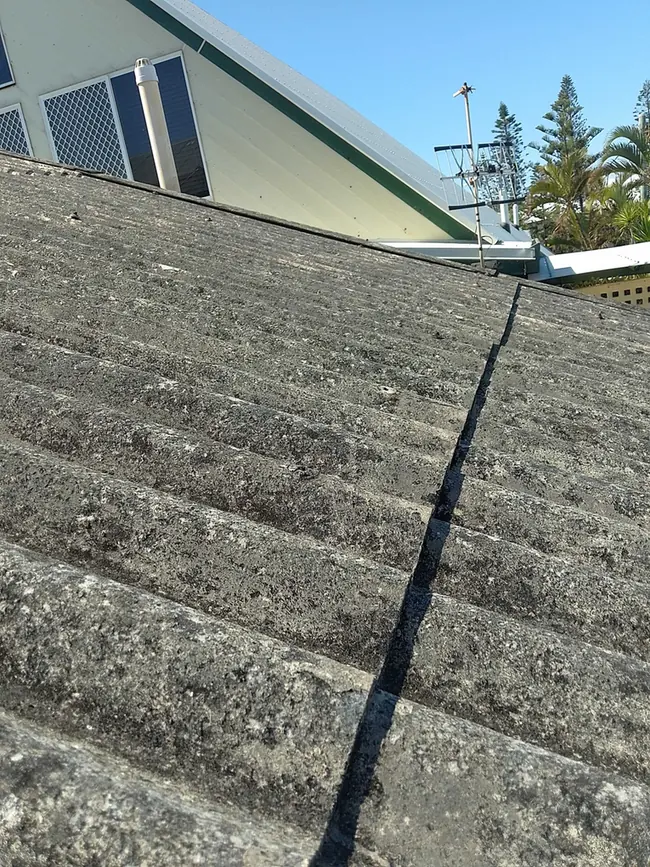
When the call comes in after a storm, people are already stressed. There’s a hole in the roof, a ceiling’s come down, or the water’s just gone out of the house. Our first job is to make it safe. We carry tarps, sandbags, repair tape, silicone, ropes and harnesses, so we’re good to go. On one recent insurance make-safe, the cement roof sheeting had cracked along the ridge and the ceiling was damaged. Once it was tarped and secure, the pressure dropped. The insurer has what it needs to start the claim, and the family isn’t left guessing.
Key takeaways
- Read your policy first. Insurers work from what’s in the policy documents.
- After a storm or flood, the Queensland Government says to assume debris from homes built before 1990 contains asbestos.
- Never water blast storm-damaged asbestos, and never put it in household bins or kerbside collection (Queensland Government).
- Insurers and builders usually need a make-safe, a NATA-accredited laboratory test, a removal scope and a clearance certificate.
- Urgent post-storm removal can skip the usual 5-day notice to WHSQ, but insurance work done months later can’t (Queensland Government).
- Coastal Asbestos Removal holds a Class B asbestos removal licence (2310863) from Workplace Health and Safety Queensland and is based in Arundel on the Gold Coast.
Does home insurance cover asbestos removal?
It depends on your policy and the cause. Insurers stick to what’s in the policy documents, so that’s where to start. They’re usually online. If an insured event like a storm, hail or flood damaged asbestos materials, removal may form part of the claim. General wear and tear is often excluded. Ask your insurer directly.
Don’t guess, and don’t start pulling damaged sheeting off to “help” the claim. That can make the clean-up bigger, and it can complicate things with the assessor. Leave it where it is and ask the question.
What happens to asbestos after a storm or flood?
Damaged asbestos can break, crack or get washed around, so treat any old sheeting, eaves or roofing as suspect. The Queensland Government says to assume storm debris from homes built before 1990 contains asbestos. Don’t water blast it, don’t use power tools on it, and keep it out of household bins and kerbside collection. Get it tested.
We’ve done a lot of this work. Our job records include flood jobs across the Gold Coast and Northern Rivers, from wall sheeting in a single bedroom to whole strip-outs after the 2022 floods. Each one started the same way, with a safe site and a test.
What is a make-safe, and where does asbestos fit?
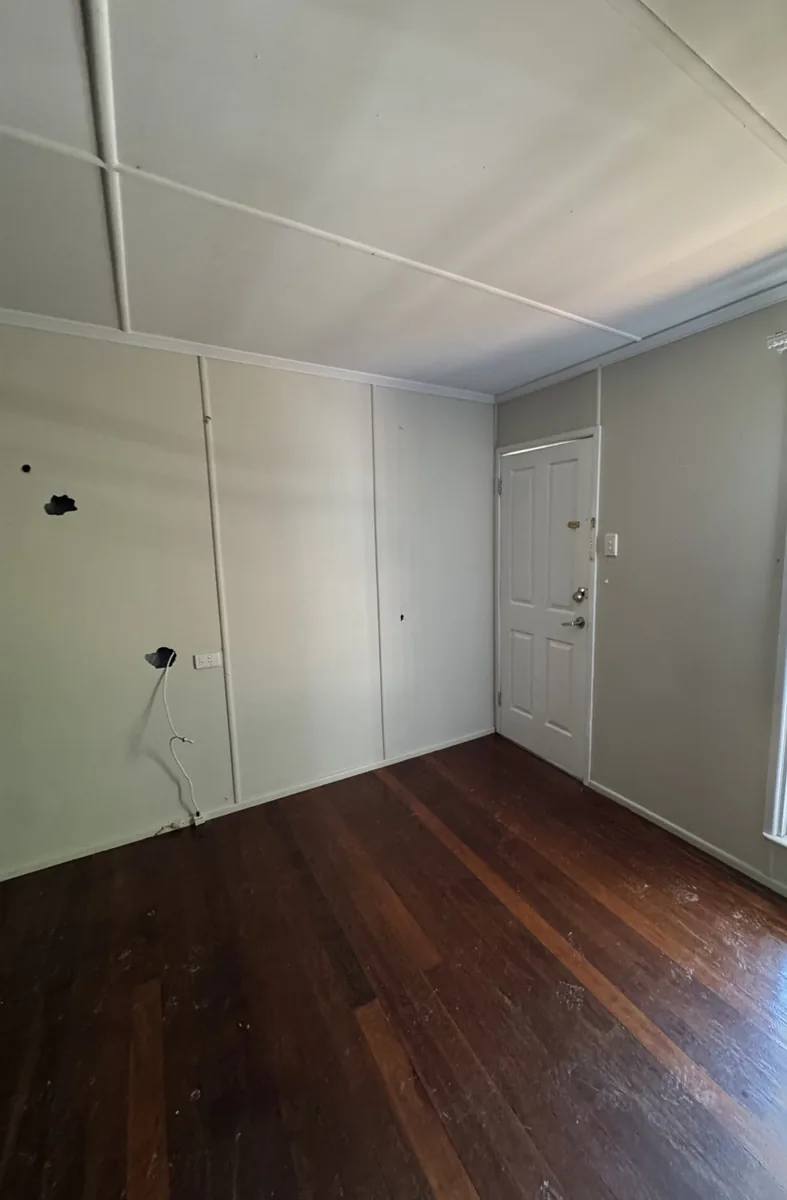
A make-safe makes your home safe and secure until proper repairs can happen. Think tarps on the roof, damaged sheeting secured, and loose material contained. Where asbestos is involved, it needs to be done by people who know how to work around it, so nobody spreads fibres while trying to help. See our asbestos make-safe page for how it runs.
On one insurance job, someone else’s make-safe had screwed straight through asbestos sheet and contaminated a whole house. That’s why the first visit matters, and why it should be done by people who know asbestos.
What will the insurer and assessor ask for?
Expect an assessor to document the damage with photos, video and measurements. Where asbestos is suspected, insurers and builders usually need a test result from a NATA-accredited laboratory, a scope that includes the asbestos removal, and a clearance certificate once it’s done. An asbestos inspection and report puts it all in writing.
You can have input into the scope, so ask questions until you understand it. If the asbestos part looks vague, ask what’s been tested and how much material is involved. A clear scope now saves arguments later.
Should I take a cash settlement if there’s asbestos?
You can, if your policy allows it, but be careful. A cash settlement pays you the value of the scope so you can hire your own trades. If the work goes over budget, the insurer won’t top it up. Where there’s asbestos, make sure the removalist you choose is licensed for the type and amount involved.
That’s the one I’d think hardest about. Asbestos removal over 10 square metres needs a licensed removalist, and friable material needs a Class A licence. Ask to see the licence before anyone starts. You’re better off not taking the chance of saving a few bucks and ending up paying more to have the work redone.
How long does an asbestos insurance job take?
After a big storm, claims slow down because everyone’s calling at once. The asbestos part has its own timing too. The Queensland Government lets licensed removalists skip the usual 5-day notice for urgent post-storm removal, but insurance work done months later still needs 5 days’ written notice to Workplace Health and Safety Queensland before licensed removal starts.
So if your removal date is a week out, that’s often why. It’s the law, not a delay on anyone’s part. We’ll tell you the date up front so you can plan around it.
What if I disagree with the insurer or the builder?
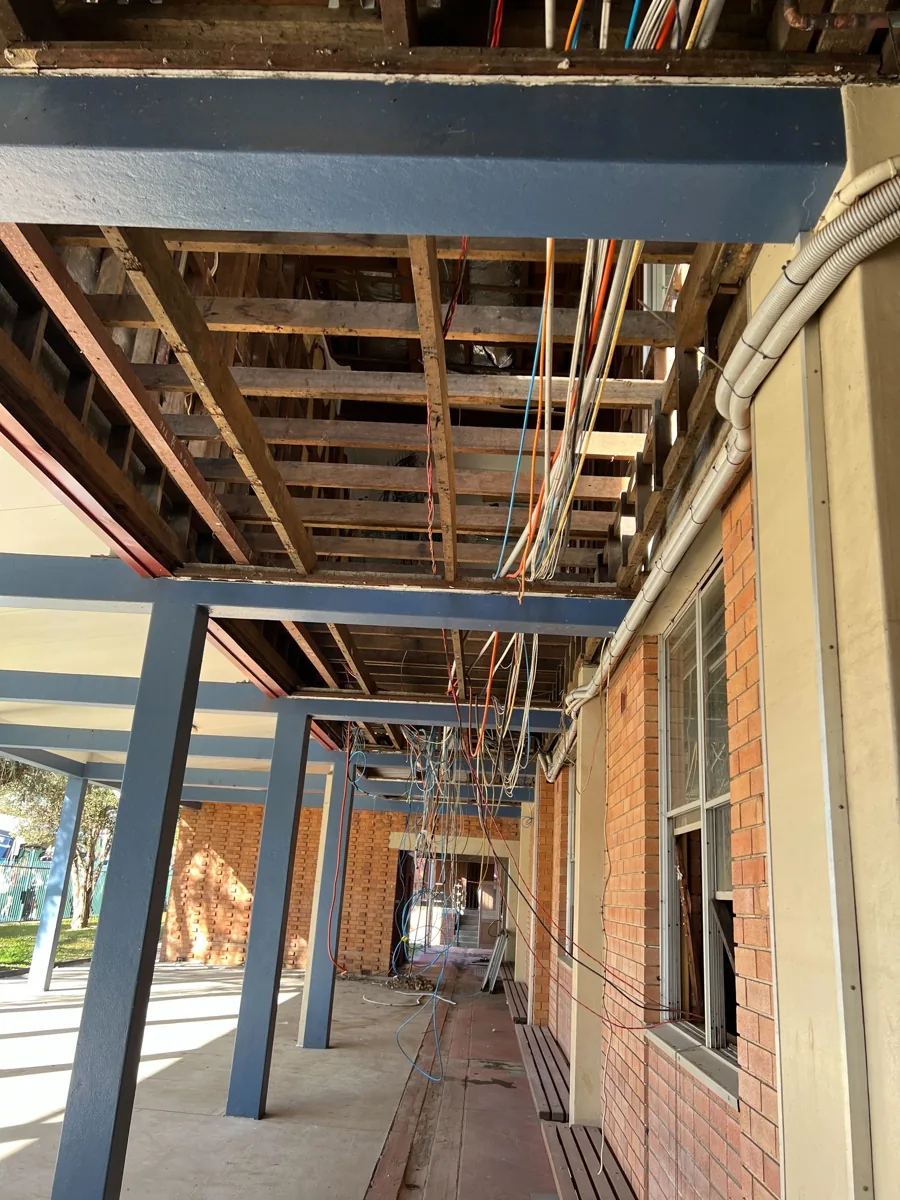
Talk it out first. Disputes cause long delays and nobody wins. If you can’t sort it out, insurance complaints can go to the Australian Financial Complaints Authority. Building work disputes in Queensland can go to the Queensland Building and Construction Commission, and in NSW to NSW Fair Trading. Keep notes, photos and test results.
Clear, open communication gets most claims over the line. It might take time to get a response, but be patient. After a big event, a lot of people are waiting.
Where asbestos fits in a typical claim
| Claim step | What happens | Where we help |
|---|---|---|
| 1. Check the policy | Read what’s covered and lodge the claim | Not our call, but we can explain what’s asbestos |
| 2. Make-safe | Home made safe and secure | Asbestos make-safe |
| 3. Assessment | Assessor documents the damage | Testing so asbestos is confirmed, not guessed |
| 4. Scope and quotes | Builders quote the scope | A clear asbestos removal scope and quote |
| 5. Removal | Licensed removal, with notice to WHSQ where required | Class B removal; friable work through our Class A licensed partner |
| 6. Clearance | Area checked before rebuilding | Clearance certificate issued by a qualified inspector |
| 7. Rebuild | Builders get on with the repairs | Done. The builder takes over |
Sources: Jason’s own insurance guide (2017, refreshed); Queensland Government, asbestos.qld.gov.au.
Frequently asked questions
Can I clean up storm-damaged asbestos myself?
We don’t recommend it. Get it tested first. The Queensland Government says removal of more than 10 square metres must be done by a licensed removalist or certificate holder, and asbestos waste must never go in household bins or kerbside collection.
Do you work directly with insurers and builders?
Yes. We work with homeowners, insurers, assessors and insurance builders on asbestos testing, make-safes and removal, and we provide the test results and clearance paperwork they need.
When can I call you?
Our office is open Monday to Friday, 9am to 4pm. AI call answering, after hours too, so your call gets picked up and logged.
What about asbestos insurance for businesses?
That’s a different question. See is your business insured for asbestos-related incidents?
Is a damaged decramastic roof an insurance job?
It can be if hail or a storm damaged it. Get the coating tested and the roof made safe. See our guide to decramastic roofs.
Who we are
Coastal Asbestos Removal is a Class B licensed asbestos removal business (Workplace Health and Safety Queensland licence 2310863) based at 2/54 Newheath Drive, Arundel, on the Gold Coast. We work across Brisbane (CBD, inner suburbs and southside), Moreton Bay, Logan, the Gold Coast, Tweed and the Northern Rivers. NSW work is done under cross-border recognition of our Queensland licence, following SafeWork NSW requirements. Owner Jason Spaull has been in the industry for over 30 years. Samples go to a NATA-accredited laboratory, and friable work is done through our Class A licensed partner.
Bottom line: after a storm or flood, leave suspect material alone, get the home made safe, and let a test result do the talking with your insurer.
Email admin@coastalasbestos.com.au or request a quote. Prefer to talk? Call (07) 5570 3706, Monday to Friday, 9am to 4pm. AI call answering, after hours too.
Sources
- Queensland Government, asbestos.qld.gov.au: Cleaning up after floods and storms (including the class exemption for urgent removal)
- Queensland Government: Cleaning or removing asbestos after floods and storms (PDF)
- Queensland Government, asbestos.qld.gov.au: Safe work procedure: storm and wind damage clean-up
- Queensland Government, asbestos.qld.gov.au: Prohibited activities
- Australian Financial Complaints Authority: afca.org.au
- Queensland Building and Construction Commission: qbcc.qld.gov.au