

What Does Asbestos Look Like? A Guide for Older Homes in QLD and NSW
By Jason Spaull, owner of Coastal Asbestos Removal. Jason has been in the asbestos industry for over 30 years. Last updated: 22 November 2026.
Short answer: Asbestos usually looks like ordinary flat or corrugated fibro, eaves lining, bathroom wall sheeting, fence panels, vinyl floor tiles or old lino. That’s the problem. It looks like everything else. The Queensland Government says you often can’t tell by looking. If your home was built before 1990, assume it might be there and get a sample tested by a NATA-accredited laboratory.
We get asked “what does asbestos look like?” all the time, usually with a phone photo of a wall attached. Here’s one that catches people out. A lot of trades reckon Villaboard doesn’t contain asbestos. All Villaboard installed before 1990 can contain asbestos, even the Villaboard with the pink dye in it. We know this because of the thousands of tests we’ve done. So the sheet looks clean, it looks modern, and the builder’s ready to cut. Then the result comes back. The job doesn’t stop for long. It just gets done the right way.
Key takeaways
- Asbestos in homes mostly looks like plain fibro: flat or corrugated cement sheeting in walls, ceilings, eaves, fences and roofs.
- It also turns up in vinyl floor tiles, the backing of old sheet vinyl and lino, and some tile glues (Queensland Government).
- Built before the mid-1980s: highly likely to contain asbestos. Mid-1980s to 1990: likely. After 1990: highly unlikely (Queensland Government).
- You can’t confirm asbestos by eye or from a photo. A NATA-accredited laboratory test is how you know.
- Coastal Asbestos Removal holds a Class B asbestos removal licence (2310863) from Workplace Health and Safety Queensland and is based in Arundel on the Gold Coast.
What does asbestos look like?
Mostly it looks like fibro. Flat grey or painted cement sheets, often with batten strips over the joins. You’ll find it in wet-area walls, ceilings, eaves, fences, sheds and old roofs. Painted, it looks like any other wall. The Queensland Government says asbestos cement sheeting was used in homes from the 1940s to the late 1980s.
That’s why we never try to pick it by colour or texture. After over 30 years in this game, I still send samples away. The age of the house and where the sheet sits tell me what to suspect. The lab tells me what it is.
Fibro and asbestos sheeting
Asbestos sheeting, or fibro, is a thin, hard cement sheet. Flat sheets were nailed to walls, ceilings and eaves, often with cover strips. Corrugated sheets went on roofs, fences and sheds. Broken edges look grey and fibrous. The Queensland Government notes asbestos cement typically contains 5 to 20 per cent asbestos, bound tight in the cement.
Non-asbestos fibre cement looks almost the same, which is why the build date matters so much. Fibro in good condition and left alone isn’t a risk, according to the Queensland Government. The trouble starts when someone cuts, drills, sands or breaks it.
Bathrooms and wet areas
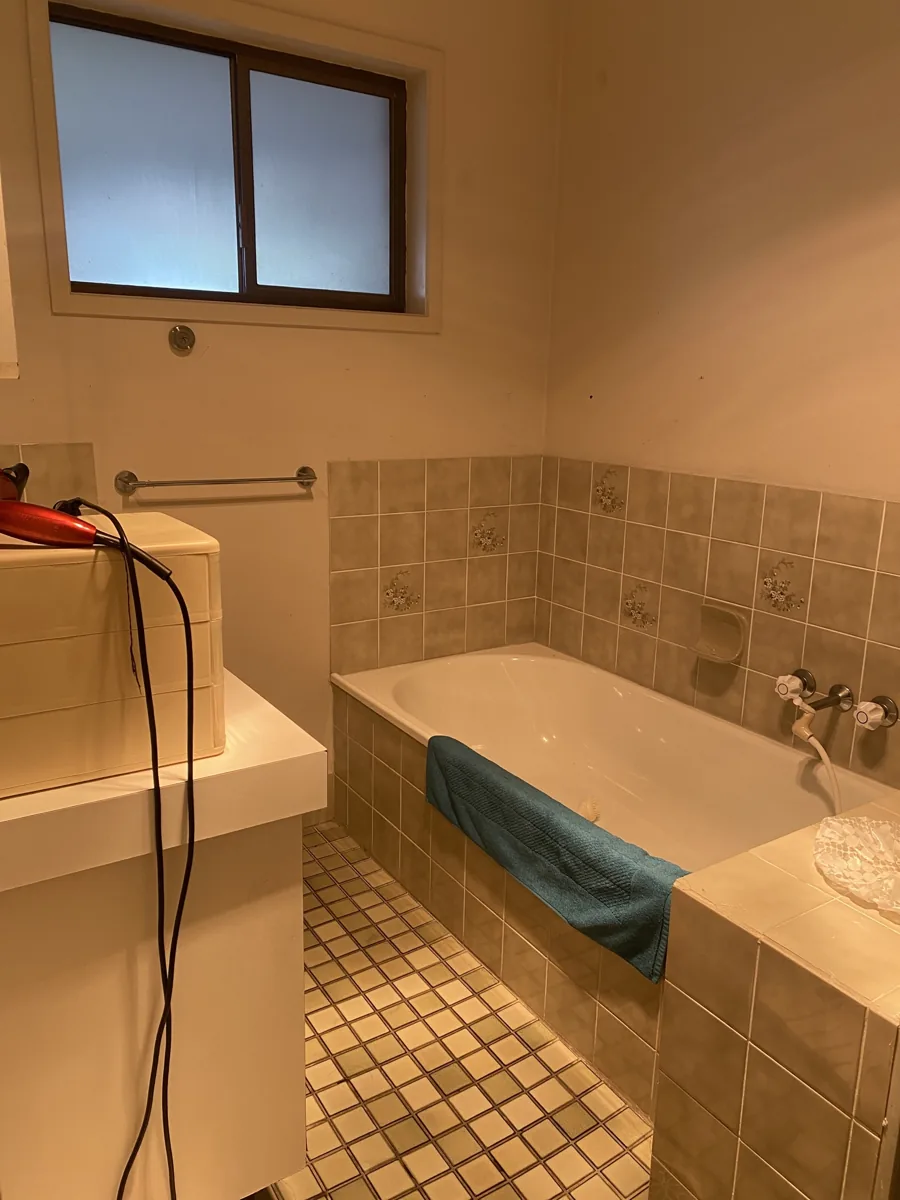
In an older bathroom, asbestos usually hides behind the tiles as wall sheeting, in the ceiling sheet, and sometimes under the floor as compressed sheet. From the room you can’t see any of it. The giveaway is the age of the house and whether that bathroom has ever been redone. Laundries and kitchens built in the same era often match.
Bathrooms are our core work, and on an old one I always want a test first, because the sheet behind the tiles is the bit you can’t see. See how we handle asbestos bathroom removal if you’re planning a reno.
Eaves, fences and roofs
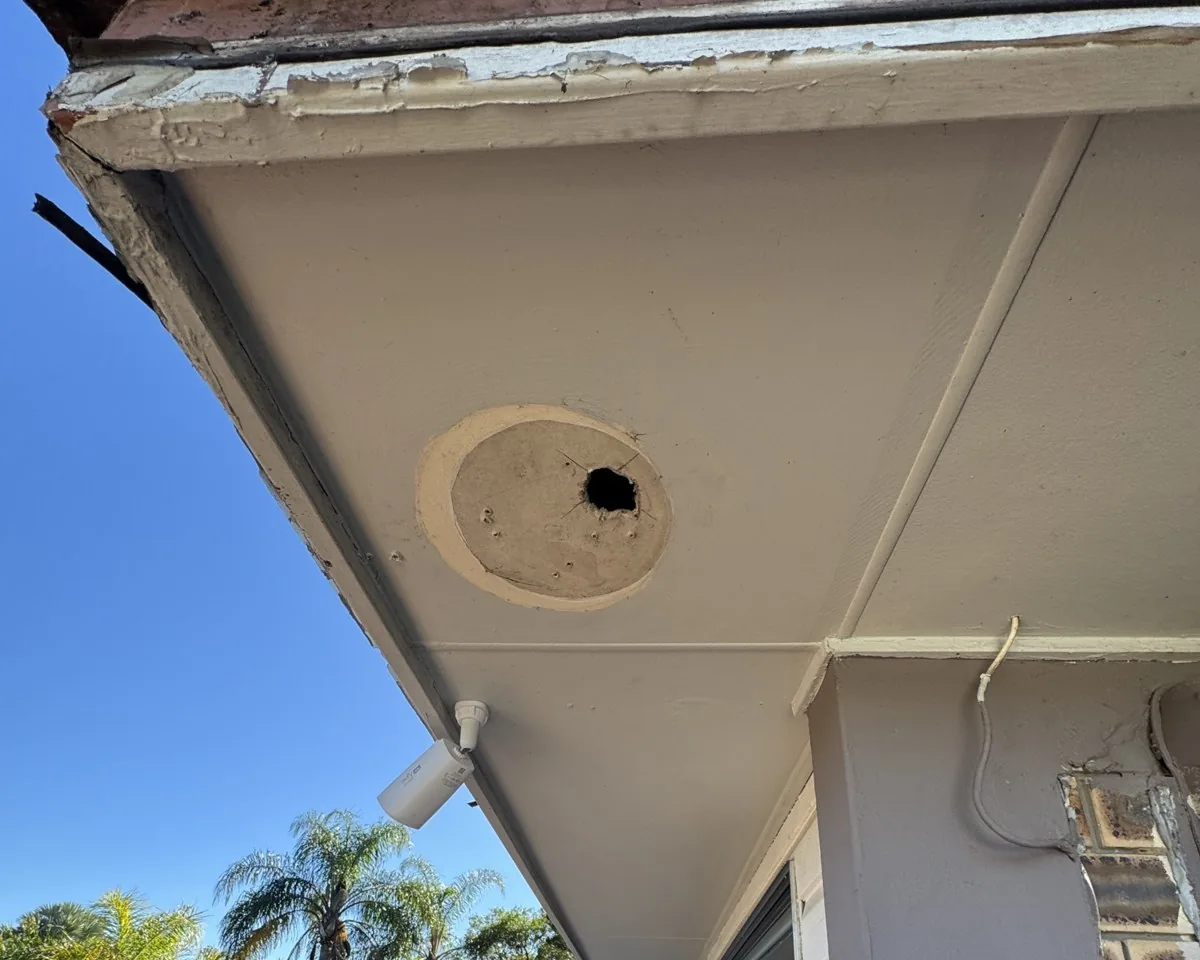
Asbestos eaves are flat sheets under the roof overhang, often with cover strips and bubbling paint. Asbestos fences are grey corrugated panels, usually unpainted and weathered on older places. Asbestos roofs are wide corrugated sheets, often Super Six profile, with moss or lichen. Some decramastic metal roof tiles also had an asbestos coating.
On eaves, my warning is that friable sheet can sometimes be used, so testing comes first. Fences mostly come out because of age or tree damage. For more, see asbestos fence removal, asbestos roof removal and our guide to decramastic roofs.
Flooring and glue
Asbestos vinyl tiles are small, hard, slightly brittle squares glued straight to the floor, often in a chequerboard pattern. Old sheet vinyl or lino can have a felt-like backing, often under a terrazzo pattern. The Queensland Government says that backing can be 80 to 100 per cent asbestos and is friable. Black or yellow tile glue can contain asbestos too.
Friable means it crumbles easily, so it’s a Class A job. We arrange that through our Class A licensed partner. Our full guide to asbestos vinyl tiles, lino and glue goes through each one.
Can you tell if something is asbestos just by looking?
No. The Queensland Government says it can be difficult to tell whether a building has asbestos by looking, and to play it safe and assume it does if you’re unsure. Asbestos and non-asbestos fibre cement can look identical. The only way to confirm it is a sample analysed by a NATA-accredited laboratory. Then you know what you’re dealing with.
The NSW Government’s asbestos site says the same: confirm whether your property contains asbestos, where it is and how much, before you start. A photo can tell me what to suspect. It can’t tell me what’s in the sheet.
What should I do if I think I’ve found asbestos?
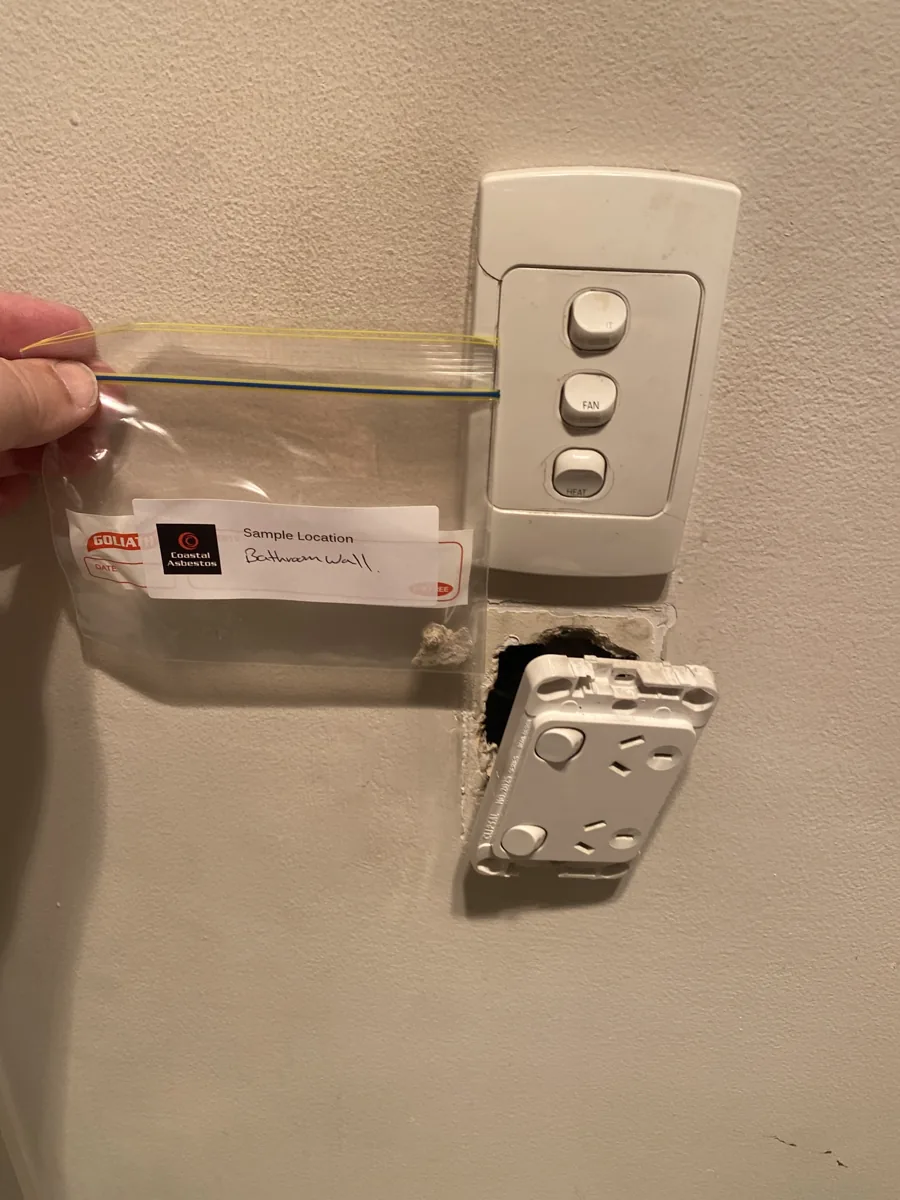
Leave it alone. Don’t cut, drill, sand, break or water blast it. If it’s in good condition, it isn’t going anywhere. Book a test so a licensed professional takes the sample safely and sends it to a NATA-accredited laboratory. Once you have the result, you can plan the reno properly, with a clear quote for any removal.
Sampling is very specific: the size, the way it’s packaged, safely harvested, clearly labelled, and the lab’s chain of custody protocols. You can book asbestos testing here. Thinking about doing it yourself? Read can I remove asbestos myself? first.
Common asbestos materials in older homes
| Material | Where you’ll see it | What it looks like | Friable or bonded |
|---|---|---|---|
| Flat fibro sheeting | Walls, ceilings, wet areas, sunrooms | Thin, hard cement sheet, often with cover strips | Bonded |
| Corrugated sheeting | Roofs, fences, sheds | Grey wavy sheets, weathered or mossy | Bonded |
| Eaves lining | Under the roof overhang | Flat sheets, often with bubbling paint | Usually bonded; test first |
| Wet-area sheeting | Behind bathroom, laundry and kitchen tiles | Hidden behind tiles | Bonded |
| Compressed sheet | Bathroom and laundry floors, balconies | Very heavy, dense sheet under tiles | Bonded |
| Vinyl floor tiles | Kitchens, halls, commercial floors | Hard square tiles glued to the floor | Bonded |
| Sheet vinyl or lino backing | Under older sheet flooring | Felt-like backing, often under a terrazzo pattern | Friable (Class A) |
| Decramastic roof coating | Pressed metal tile roofs | Stone-chip coating on metal tiles | Bonded; test first |
Source: Queensland Government, asbestos.qld.gov.au (“How was asbestos used?” and Asbestos: a guide for minor renovation), plus our own jobs. Only a NATA-accredited laboratory test confirms asbestos.
Frequently asked questions
How old does a house have to be to have asbestos?
The Queensland Government’s rule of thumb: built before the mid-1980s, highly likely; mid-1980s to 1990, likely; after 1990, highly unlikely. Renovations count too. A 1920s cottage renovated in the 1970s can have asbestos in the newer parts.
Is pink Villaboard asbestos?
It can be. From the thousands of tests we’ve done, Villaboard installed before 1990, including the pink-dyed sheets, can contain asbestos. Get it tested before anyone cuts it.
Does painted fibro still contain asbestos?
Yes, paint doesn’t change what’s in the sheet. Paint does help keep bonded asbestos in good condition, but bubbling or flaking paint can be a sign the sheet is weathering.
Can you identify asbestos from a photo?
No. A photo helps us decide what to sample, but only a NATA-accredited laboratory can confirm asbestos. That’s the same advice the Queensland Government gives.
Is asbestos dangerous if I leave it alone?
The Queensland Government says non-friable asbestos in good condition isn’t a health risk unless it’s physically disturbed. The risk comes from cutting, drilling, sanding, breaking or water blasting it.
When was asbestos banned?
According to the Queensland Government, asbestos building products were used from the 1940s to the late 1980s, and all asbestos products were banned nationally from 31 December 2003. Read more in when was asbestos banned in Australia?
Who we are
Coastal Asbestos Removal is a Class B licensed asbestos removal business (Workplace Health and Safety Queensland licence 2310863) based at 2/54 Newheath Drive, Arundel, on the Gold Coast. We work across Brisbane (CBD, inner suburbs and southside), Moreton Bay, Logan, the Gold Coast, Tweed and the Northern Rivers. NSW work is done under cross-border recognition of our Queensland licence, following SafeWork NSW requirements. Owner Jason Spaull has been in the industry for over 30 years. Samples go to a NATA-accredited laboratory, and friable work is done through our Class A licensed partner.
Bottom line: if the house is older than 1990 and you’re about to cut into it, get it tested first.
Email admin@coastalasbestos.com.au or request a quote. Prefer to talk? Call (07) 5570 3706, Monday to Friday, 9am to 4pm. AI call answering, after hours too.
Sources
- Queensland Government, asbestos.qld.gov.au: How was asbestos used?
- Queensland Government, asbestos.qld.gov.au: What is asbestos?
- Queensland Government: Asbestos: a guide for minor renovation (PDF)
- Queensland Government, asbestos.qld.gov.au: Testing for asbestos
- NSW Government asbestos site (with SafeWork NSW): Unlicensed asbestos removal


