


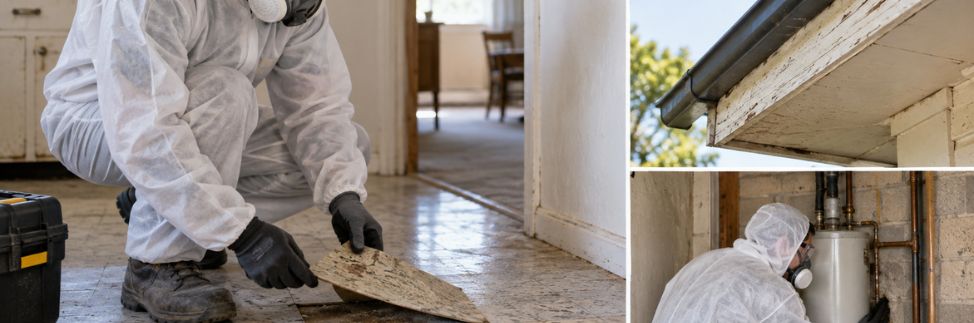
When most people think of asbestos, materials such as old fibro sheeting, roofing, fencing and eaves often come to mind. While these are well-known examples, asbestos was used in a much wider range of building products, household items and commercial applications than many property owners realise.
Some asbestos-containing materials can be concealed beneath newer finishes or found in places where you might not immediately expect them. Knowing where asbestos may be present can help property owners recognise when a material should be left alone and professionally assessed.
At Coastal Asbestos, we have more than 35 years of experience working with asbestos across residential, commercial and industrial properties on the Gold Coast. One thing that experience has shown us is that asbestos is not always found where people expect it to be.
Why Was Asbestos Used in So Many Different Products?
Asbestos was widely used because of properties including heat resistance, fire resistance, durability and insulation. These characteristics made it useful across a broad range of building materials and products before its use was prohibited in Australia.
As a result, asbestos may be present in more than the obvious fibro products commonly associated with older properties. It can also be concealed within flooring, electrical components, insulation and heat-resistant products.
The age of a property can provide useful context, but it does not tell you exactly where asbestos is present or whether a particular material contains it.
Where Can Asbestos Be Found Around a Property?
Some locations are relatively well known. Older properties may contain asbestos cement products in wall and ceiling sheeting, eaves, roofing, fencing and wet areas.
Other locations can be much less obvious.
– Flooring and materials beneath the surface
Older vinyl and linoleum flooring can contain asbestos, including within the backing material. Adhesives and materials beneath floor coverings may also be a concern.
This means replacing flooring can sometimes expose materials that were not visible when looking at the room beforehand.
– Electrical and heat-resistant products
Because of its resistance to heat and fire, asbestos was also incorporated into some older electrical and heat-resistant products.
Examples may include:
- electrical backing boards and some fuse boxes
- older electrical components
- rope seals around ovens, heaters and potbelly stoves
- older fire blankets and other fire-resistant products
These are easy to overlook because they do not necessarily resemble the building materials most people associate with asbestos.
– Bathrooms, laundries and other wet areas
Bathrooms and laundries can contain several layers of materials installed at different times.
Asbestos-containing materials may potentially be present in wall or ceiling sheeting, backing boards, flooring or materials concealed behind tiles and other finishes.This is one reason looking only at the visible surface of a material can be misleading.
– Commercial and industrial properties
The potential locations can be even broader in older commercial and industrial environments.
Asbestos was historically used in applications where insulation, durability and resistance to heat were important. Depending on the building and equipment, this can include insulation associated with pipes or HVAC systems, gaskets, seals, generator components, plant and machinery, and some lift components.
– Outdoor and less obvious locations
Asbestos is not necessarily confined to the building itself.Older structures, sheds, fencing and some pool-related materials may contain asbestos. Fragments of asbestos-containing material can also sometimes be found in soil or around properties as a result of previous building work or disposal practices.
There are also some less obvious places asbestos can be found around a property, including areas and products many owners would never think to check.
Can You Tell If Something Contains Asbestos by Looking at It?
In most cases, no. Although the age, appearance and location of a material can indicate that asbestos may be present, visual inspection alone cannot confirm its asbestos content. This is particularly important when a material is hidden beneath another surface or looks similar to a non-asbestos product.
Where there is uncertainty, asbestos testing can provide a definitive answer. A sample can be professionally collected and analysed so you know what material you are dealing with rather than relying on an assumption.
What Happens During an Asbestos Inspection?
An asbestos inspection involves assessing a property or particular area for materials that may contain asbestos. Depending on the circumstances, samples of suspected materials may be taken for laboratory analysis.
The findings can then be documented to help establish:
- where asbestos-containing materials have been identified
- the type and condition of the material
- whether further action is recommended
- how the material should be managed
An asbestos inspection report can be particularly useful when a property contains several suspected materials or when owners, property managers or businesses need a clearer record of what has been identified.
What Should You Do If You Find a Material You Suspect Contains Asbestos?
If you come across an unfamiliar material that you believe could contain asbestos, avoid cutting, drilling, sanding, breaking or otherwise disturbing it. Do not rely on appearance alone to decide whether the material is safe.
Instead, arrange for the material to be assessed and, where appropriate, tested. Once you know whether asbestos is present, you can make an informed decision about whether the material can remain safely managed in place or whether professional asbestos removal is required.
Unsure About a Material on Your Property?
Asbestos does not always appear in the places people expect, and identifying it correctly is an important part of managing the risk.
If you have discovered suspicious material or would like greater certainty about asbestos within a Gold Coast property, Coastal Asbestos can assist with professional asbestos inspections and testing. Contact Coastal Asbestos to discuss your property and the most appropriate next step.
Frequently Asked Questions
Where is asbestos most commonly found in older homes?
Asbestos may be found in older wall and ceiling sheeting, eaves, roofing, fencing, wet areas and some flooring products. It can also occur in less obvious locations, including electrical backing boards, materials beneath flooring and heat-resistant products.
Is asbestos only a concern in residential properties?
No. Asbestos-containing materials can also occur in commercial and industrial properties. Older insulation, HVAC components, gaskets, seals and some plant or machinery may contain asbestos depending on their age and construction.
What is included in an asbestos inspection report?
The exact contents depend on the scope of the inspection, but an asbestos inspection report can document suspected or confirmed asbestos-containing materials, their locations and condition, and recommendations for managing any identified risks.
Does finding asbestos mean it always has to be removed?
Not necessarily. The appropriate response depends on factors such as the material, its condition, location and likelihood of being disturbed. Professional assessment can help determine whether the asbestos can be managed safely in place or whether removal should be considered.
When should I arrange asbestos testing?
Testing should be considered when there is a material suspected of containing asbestos and its composition cannot otherwise be confirmed. Rather than guessing based on its appearance, professional testing can establish whether asbestos is actually present.