Logo
The Top No No’s with Asbestos

The Top No No’s with Asbestos

Today, we’re going to talk about the big no-no’s with asbestos. This is going to be a quick one and it’s just all about any of these things that you do, you can release asbestos fibers. And they’re so light, they will penetrate every part of your home. They’ll spread for ages, endangering people everywhere around you.

So,the number one no-no is do not ever, ever, ever cut asbestos with an angle grinder. We had a job about two years ago, where someone decided that they would cut asbestos with an angle grinder. We had to get specialists involved. Those people lost everything in their house. There was testing done by hygienists, from every corner of the house, and they found that the asbestos fibers were in the bedrooms, the lounge room, the kitchen, the rumpus room, the garage. The only safe thing to do was to… what we couldn’t decontaminate, we threw out. And the people in the house said, “You know what? We don’t want any of it. We don’t even want to have to wonder whether it is or not.” So that’s key, I can’t stress the importance of that.

Number two,you should never water blast any asbestos products. I know people have fences painted,the outside of their house, mold removal, and all that kind of stuff. High-pressure water blasting is a massive no-no. If you water blast asbestos roofs happen all the time, what that does is it erodes the surface, releases the shards and breaks down the fibers, and they just spread everywhere. Worst-case scenario, or not even worst-case scenario, typical standard procedure would be about 30-$40,000 cleanup if you water blast an asbestos roof. Big chunks of cement and asbestos just fly everywhere. It’s going to spray all over the neighbours, it’s going to go through your whole garden. Things like the garden will have to be ripped out, and the top 100 mils of soil and grass will come out. It’s a really big deal. That roof may have to be replaced if it can’t be encapsulated if it’s deemed too unsafe. So never water blast anything asbestos.

The other thing is don’t see it. Don’t go, “Oh, well, I’ve got this special fibro saw.” I guess you can buy the saws from Bunnings that’ll cut tiles and all that kind of stuff. So, I’m not saying that there are things that are out there that don’t exist, but you just can’t use them on asbestos. You definitely can’t cut it with a grinder, and definitely can’t water blast it, but you may be able to use a saw under controlled conditions if you’re trained and you’ve got the right equipment. But, a golden rule, do not see asbestos.

Another one that we see a lot is drilling into asbestos. We have equipment for that, it’s not a DIY thing. There are all these ridiculous things with shaving creams in coffee cups. And people are going to say,”Oh, that’s what we did.” But I can tell you what’s happened because we’ve tested it. We didn’t test it on asbestos sheeting, we tested it on just normal fibro. When you fill a cup with shaving cream and you put it against a wall and you drill, what happens is the first layer of dust that hits that shaving cream actually just forms a crust, and then all the other dust just hits up against it. So, when you pull the cup out, you have this dust. So just don’t. There’s a whole industry out there, including us, of people that are equipped to do that.

So, no water blasting, no cutting with grinders, no sawing of asbestos. And I’m going to put in there, and drilling holes. And I’m going to put in there, as well, no hole saws. Because someone’s going to go, “Oh, I’m not drilling, I’m putting in a hole saw.” A lot of electricians are fitting downlights into eaves. Okay, we see it alot. I was at a job yesterday where the electrician went with the 10 square meter rule and said, “It’s all right, I can drill these holes into your eaves, no worries, for your downlight, that’s great.” I spoke to the homeowner. She had no idea that her eaves could be asbestos. She said there was dust everywhere. The guy had it all over his face. It’s just massive, why? I don’t understand why anyone would risk it. We have equipment here at Coastal Asbestos, we can cut from 25 mils up to about 450 milround holes in asbestos sheeting. It’s specialised equipment. We’re trained, we’ve got all the gear, just call us. There’s no need for any electricians to be boring holes through asbestos eaves for downlights.

You’ve got two options. These are the only two options. Get someone who’s trained, professional, licensed and insured to do the work, or have the eaves removed. I guess there is option three, just don’t do it. So, I can’t stress the importance enough, all these things that we’re talking about turn something innate, that is just sitting there, into friable asbestos. And you don’t want to be messing around with friable asbestos. So that’s me, Jason from Coastal Asbestos. I hope you found that informative. If you like this video, there’s plenty more over on our YouTube channel:

https://www.youtube.com/channel/UC2Y2tY

Can I Remove Asbestos Myself in QLD or NSW? The 10 Square Metre Rule Explained

Can I Remove Asbestos Myself in QLD or NSW? The 10 Square Metre Rule Explained

By Jason Spaull, owner of Coastal Asbestos Removal. Jason has been in the asbestos industry for over 30 years. Last updated: 22 November 2026.

Short answer: Can I remove asbestos myself? Legally, sometimes. In Queensland and NSW you can remove up to 10 square metres of non-friable (bonded) asbestos without a licence, but strict safe work rules still apply. Friable asbestos is licensed-only. Above 10 square metres, Queensland homeowners need a Queensland Health certificate. My advice: get it tested, then leave removal to a licensed removalist.

This one gets me fired up. I was on site with a representative from Workplace Health and Safety Queensland, on a job where somebody had decided to take off about 10 square metres of asbestos because they “didn’t need a ticket”. Here’s the bit people leave out. The rule doesn’t just say you can remove 10 square metres. It says you can do it under controlled conditions. That second half is where it goes wrong. We had one job where a handyman ripped up a floor and it ended in around a hundred thousand dollars of loss. On another, someone doing a make-safe screwed through asbestos sheet and contaminated a whole house. The people responsible disappeared into the wind.

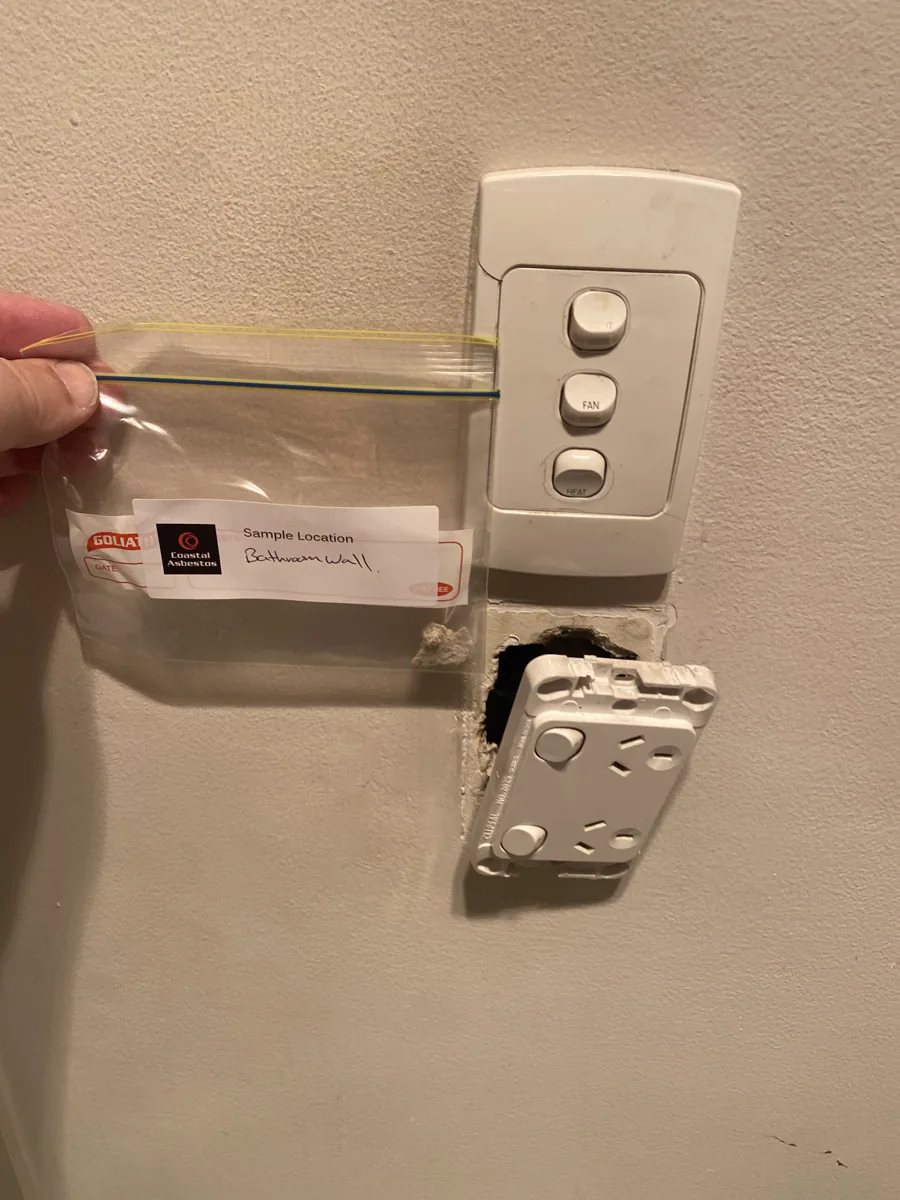
Labelled asbestos sample bag held against a bathroom wall
Testing comes first: a sealed, labelled sample from a bathroom wall

Key takeaways

  • In QLD and NSW, up to 10 m² of non-friable (bonded) asbestos can be removed without a licence, but safe work rules still apply (Queensland Government; NSW Government and SafeWork NSW).
  • Friable asbestos, like the backing on old lino, can only be removed by a Class A licensed removalist.
  • 10 m² is the whole job, not 10 m² a day. It’s about four sheets of wall sheeting, or usually one bathroom wall (Queensland Government).
  • Above 10 m², a tradie needs a Class B or A licence. A Queensland homeowner needs a Queensland Health certificate (Queensland Government).
  • SafeWork NSW recommends a licensed removalist for any amount.
  • Coastal Asbestos Removal holds a Class B asbestos removal licence (2310863) from Workplace Health and Safety Queensland and is based in Arundel on the Gold Coast.

Can I remove asbestos myself in Queensland?

Only a small amount of the bonded kind. The Queensland Government says homeowners can remove 10 square metres or less of non-friable asbestos without a certificate, as long as they follow safe work procedures. More than 10 square metres needs a certificate under arrangements approved by Queensland Health. Friable asbestos must only be removed by a Class A licence holder.

So it’s legal. It’s just not simple, and it’s never something I’d recommend for your family home. The rules are on the Queensland Government’s asbestos site, and they’re worth reading before anyone picks up a tool.

Can I remove asbestos myself in NSW?

The same 10 square metre line applies. The NSW Government’s asbestos site says a homeowner, or a tradesperson working for them, can remove less than 10 square metres of non-friable asbestos. More than that, or any friable asbestos, needs a licensed removalist. SafeWork NSW goes further and recommends a licensed asbestos removalist for any amount of asbestos.

For NSW jobs over 10 square metres, the removalist must also notify SafeWork NSW and, for larger loads, track the waste. We do our NSW work under cross-border recognition of our Queensland licence.

What is the 10 square metre rule, really?

It’s a limit, not a permission slip. It covers non-friable asbestos only, and it means the whole job, not 10 square metres a day. The Queensland Government says a job can’t be split over different days to dodge the rule. As a guide, 10 square metres is about four sheets of wall sheeting, or usually one bathroom wall.

That’s the part people miss. A full bathroom or kitchen reno can easily be 50 square metres of sheeting, and the Queensland Government uses that exact example. At that size you need a certificate or a licensed removalist. No way around it.

Can my builder, plumber or handyman remove it?

Only up to 10 square metres of bonded asbestos, and only with proper safe work procedures. The Queensland Government says a tradesperson removing more than 10 square metres needs a Class B or Class A asbestos removal licence from Workplace Health and Safety Queensland. Friable asbestos always needs Class A. Ask to see the licence before they start.

When your plumber or handyman says, “That’s all right, I can just take that off,” that’s a red flag. Ask whether they’re insured for asbestos, too. If something goes wrong, it can land on you. Electricians are the only ones allowed to touch electricity, gas fitters do gas, and asbestos should be the same.

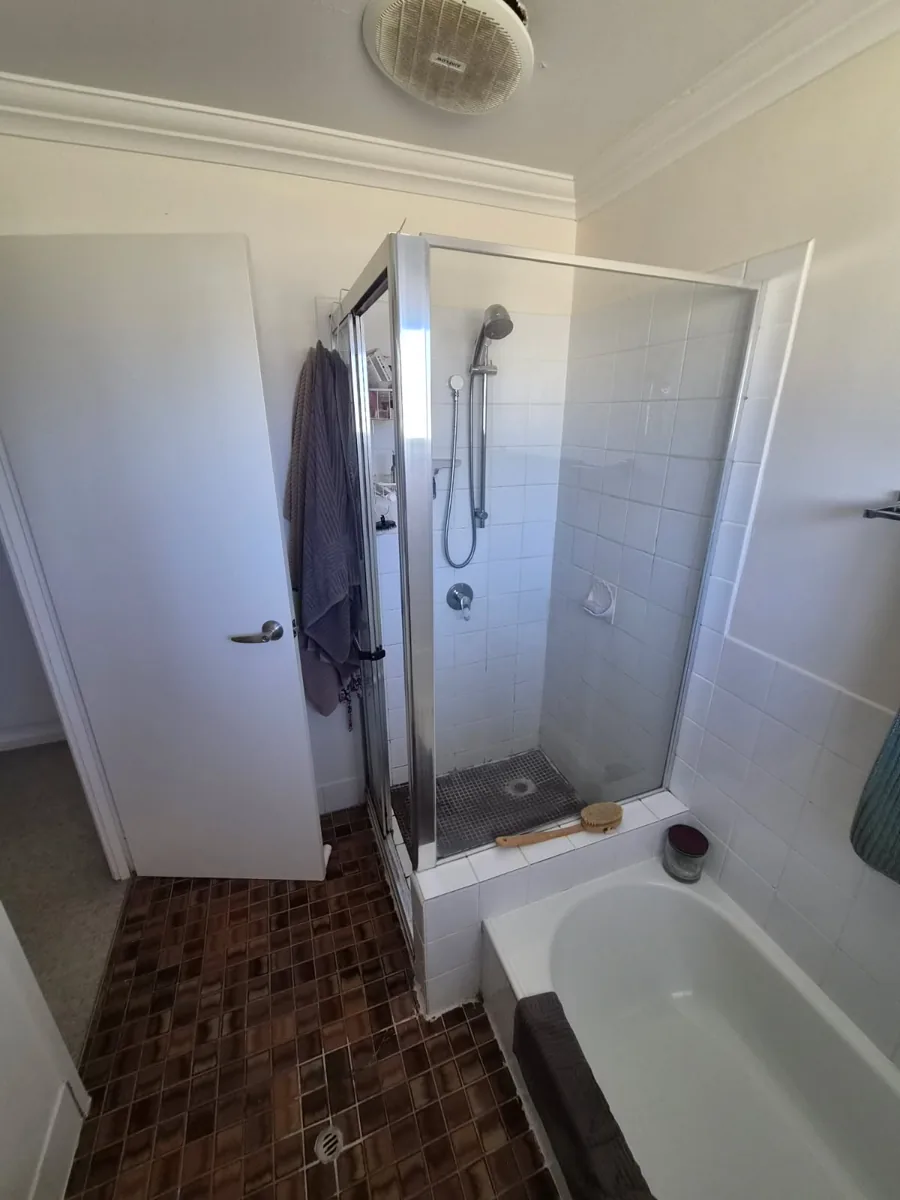
Older bathroom with shower screen and tiled floor before an asbestos strip-out
Bathroom before a licensed strip-out in Nerang

Why doesn’t “I’ll just bag it” work out?

Because removal isn’t the hard part. Doing it without spreading fibres is. Asbestos work needs the right vacuum, a properly fitted mask, a clean work area and legal disposal. The Queensland Government says asbestos waste must never go in household bins or kerbside collection. Get any step wrong and you can contaminate the rest of the house.

The vacuum has to be an H-class unit rated for asbestos, not a household vac, even one with a HEPA filter. That’s in Queensland’s prohibited activities list. A mask only works if it’s fit-checked, and facial hair stops it sealing. That’s why we leave it to trained, equipped, licensed and insured people. It’s just not worth it.

What should I do first if I think it’s asbestos?

Leave it alone and get it tested. A licensed professional takes the sample safely and sends it to a NATA-accredited laboratory, so you know what you’re dealing with and how much there is. Then you can get a clear quote for licensed removal and disposal, and your reno keeps moving without guesswork or risk.

You can book asbestos testing here, or see how we handle licensed asbestos removal and asbestos pickups and transport. Not sure what you’re looking at? Start with what asbestos looks like.

QLD vs NSW at a glance

Situation Queensland NSW
Homeowner, 10 m² or less of non-friable Allowed without a certificate; safe work procedures still apply Allowed; SafeWork NSW recommends a licensed removalist anyway
Homeowner, more than 10 m² of non-friable Needs a certificate under Queensland Health arrangements, or a licensed removalist Licensed removalist required
Tradesperson, 10 m² or less of non-friable No licence needed; safe work procedures required No licence needed; must follow the SafeWork NSW Code of Practice
Tradesperson, more than 10 m² of non-friable Class B or Class A licence (WHSQ) Licensed removalist; SafeWork NSW notified
Any amount of friable asbestos Class A licence only Class A licence only
Waste Never in household bins or kerbside collection Licensed landfill only; larger loads tracked

Sources: Queensland Government, asbestos.qld.gov.au; NSW Government, asbestos.nsw.gov.au; SafeWork NSW. This table explains the law. It isn’t a guide to doing the work.

Frequently asked questions

Can I remove asbestos myself if I’m renovating a bathroom?

A full bathroom usually has more than 10 square metres of sheeting once you count every wall, so in Queensland you’d need a certificate or a licensed removalist. In NSW, more than 10 square metres needs a licensed removalist. Get it tested first.

Can I remove a few asbestos sheets over a few weekends?

No. The Queensland Government says you measure the whole job, and it can’t be broken into smaller amounts on different days to avoid needing a certificate.

Is the backing on old lino OK to pull up myself?

No. The Queensland Government says the felt-like backing on old sheet vinyl and lino is friable asbestos, and only a Class A licensed removalist can remove it. We arrange that through our Class A licensed partner.

Where does asbestos waste go?

Not in your wheelie bin, a skip or kerbside collection. It has to go to a facility licensed to take it. We use our own EPA-registered trucks. See asbestos pickups and transport.

Does my home insurance cover DIY asbestos mistakes?

Check your policy. In my experience, unlicensed trades often aren’t insured for asbestos, so if something goes wrong, the cost can end up with you. For claims after damage, see our guide to asbestos insurance after a storm or flood.

Who we are

Coastal Asbestos Removal is a Class B licensed asbestos removal business (Workplace Health and Safety Queensland licence 2310863) based at 2/54 Newheath Drive, Arundel, on the Gold Coast. We work across Brisbane (CBD, inner suburbs and southside), Moreton Bay, Logan, the Gold Coast, Tweed and the Northern Rivers. NSW work is done under cross-border recognition of our Queensland licence, following SafeWork NSW requirements. Owner Jason Spaull has been in the industry for over 30 years. Samples go to a NATA-accredited laboratory, and friable work is done through our Class A licensed partner.

Bottom line: the 10 square metre rule is a limit, not an invitation. Get it tested, then let the licensed people handle it.

Email admin@coastalasbestos.com.au or request a quote. Prefer to talk? Call (07) 5570 3706, Monday to Friday, 9am to 4pm. AI call answering, after hours too.

Sources

Asbestos Roofing

Asbestos Roofing

Today, we’re going to talk about asbestos roofing. This is near and dear to my heart because it’s pretty much how I got started in the industry. Back in the day, I’m a roof plumber by trade. The first time I ever encountered, asbestos on a job was doing asbestos roof removal and replacement with a new metal roof. Also, we used to do a lot of asbestos gutter removal and asbestos downpipe removal, but there’s more to it. I can start this video by saying one thing if you get from this video, one thing and one thing only asbestos roof removal, asbestos guttering removal, and asbestos downpipe removal is not in any way capable of being done by a DIY enthusiast. The two-story asbestos roof removal and replacement are one of the most dangerous activities you can undertake in the building construction industry. The amount of safety, knowledge, culture, and practices you have to have in place to be able to do it safely and successfully is just way out of the range of a DIY enthusiast.

Now asbestos roofing, there are about three main types. So, we have asbestos super six that everyone’s fairly familiar with. Then there’s the asbestos standard sheet. So, the standard looks a hell of a lot like corrugated iron, just normal corrugated iron, and then there are asbestos shingles. But they all have one thing in common, when they break down, them when they get to the age where they start to crack and break, they’re just not repairable. With over 30 years experience across our team in roofing and asbestos, I can tell you I’ve seen and heard it all. I’ve seen it all and I’m not convinced that there’s any way to successfully repair a leaky asbestos roof, because one thing is important.

You only want one thing when you’re repairing a leak and that is to stop the leak. Now, if you start putting things over things, spraying things on things, all sorts of ideas that people come up with. It’s only ever going to be temporary, and it’s never going to be a fix. If you’re going to fix a roof leak, you want it to be permanent. So, let’s not worry about all these products and processes that claim to fix asbestos roof leaks. And there’s a number that’s important in this. This roof is 60-plus years old; they are way past so used by day. In Southeast Queensland, they’ve been subjected to hail, the sand, and wind, if they’ve been on the ocean front, there’s salt as well. These things are way past their day.

Nobody should be getting on an asbestos roof unless it’s been removed and replaced. So, at Coastal Asbestos here, we do not repair the asbestos roof. We remove them, that’s it.  I’ve seen people go through asbestos roof sheeting that’s old and brittle. Sometimes you can just stand on it and you can crack a sheet and if you’re going to take that risk and you crack the asbestos roof sheeting on somebody’s house and it creates a leak. You could be up for a whole new roof. So just please don’t do it. It is not worth it. Everything has a timeline and when the asbestos roofs are done, they’re done.

The important things to worry about with asbestos roofs are, that if you have a house with an asbestos roof, it is time to replace it. The best time is now to think about replacing it because it is going to let you down. In the worst-case scenario, if you’ve got an asbestos roof and it leaks, and you’re going to the asbestos ceiling, you are going to have asbestos fibres come through that roof cavity into your home. After all, the thing about asbestos roofs and roof spaces is they’re probably the most heavily contaminated parts of anybody’s house without a doubt because the house is made of timber and most houses are made of timber, nearly all the houses with asbestos cement are all timber. I’d be surprised, maybe a few industrial places shed that don’t. And when these houses move in the wind these sheets are rubbing together like that, and constantly releasing fibres into the ceiling cavity.

So, you don’t want to be crawling around on an asbestos roof. That’s why a lot of solar companies just won’t fit solar to an asbestos roof because it’s time to replace them. Now, a few important things that we get asked about asbestos roof removal. Okay, number one, this is crucial. The whole sealing cavity has to be cleaned out and vacuum and seal encapsulation spray. So if you’ve got cool n cozy, if you’ve just put bats in last week, I’m sorry, they’ve got a go. If you’ve got foil installation, it’s got to go. Cool and cozy, it’s a big problem. It doesn’t have asbestos in it, but because it’s been in the ceiling for that long, and that action of the sheets rubbing in it is now contaminated.

If you’ve got someone coming to your house, telling you they can leave the cool and cozy in, or they can leave the bats in or leave the insulation in, it’s not number one, it’s not to the code. So that makes it illegal and number two, what is the point of removing asbestos from your home, like a roof and leaving a heavily contaminated roof space. It just doesn’t make any sense to us.

So, you’ve got your super six roofs. You’ve got your standard asbestos roofing, and you’ve got the shingles. The shingles, just look like little bits of fibro and they are, they’re probably about 300 mm by 300 mm or whatever it was back in the day, 12 inches by 12 inches and, they just sort of overlap as well. Usually, there is plywood or something under them to support them. The big thing that’s in common, all asbestos roofs have is they’re out of date. They’re going to let you down and it can be catastrophic when they fail. And as a roofer, I can tell you the best time to get your asbestos roof replaced is now and in winter. Don’t wait as everybody else does for the hottest months of the year with storms rolling in every afternoon and go, we should get our roof fixed. You should get your roof fixed before storm season, not during storm season. It just creates all amount of habit, pain and anxiety.

So that’s it for me today. That’s an asbestos roof. That’s what you need to be aware of. You’re going to have guys working at heights, so they have to manage the risk of heights at all times. You’re going to make sure that cavity gets decontaminated. All that insulation, it’s got to go. It’s got to be encapsulated. And like all asbestos removal jobs over 10 square meters, it has to be inspected and a clearance certificate issued. So, if you like this video, there are plenty more of them over on our YouTube page. So just head over there now, that’s it for me for today. Jason, from coastal asbestos.

 
Asbestos Related Diseases

Asbestos Related Diseases

What should we be aware of? Well, the fact that asbestos creates so many diseases, we can listen through; there’s Mesothelioma, asbestosis, types of lung cancer, types of ovarian cancer, types of esophagus cancer, and it kicks off a lot of things because what the asbestos does is the minute fine particles, they get into the deepest part of your lungs and they get in there and your body just can’t eject them and they hook in, they’re going to create inflammation, which leads to cancers and other debilitating diseases that we spoke of before.

Now, the reason why this happens is because of the dust. Asbestos related diseases are dust related diseases, which makes them totally preventable, a hundred percent preventable, especially now with all the knowledge and all the PPE and the safety culture that we have within industry, it’s readily available, it’s quite cheap and there’s a lot of information on the internet on how to handle asbestos safely, how to transport it safely, where to dump it, you can put all sorts of control measures in place. Like one of our favourite pieces of equipment is we use a negative pressure unit (NPU). What that does is as we’re working, we can create an enclosure and hook up the negative pressure unit. Now, what that does is it changes the air in the work area, and it’ll draw all of the air out of the room while we’re working and pass it through a double HEPA filter that is 99.994 % efficient. This means there’s absolutely no risk of any asbestos fibers coming outside that work area. I love it. It’s not something that we are required to do under the act for the work that we do, but we believe it’s the gold standard for asbestos removal.

And we’re using it a lot more, it is simply the best way to protect you and your family from the dust that’s created from asbestos. Now that dust isn’t pure asbestos, asbestos sheeting and asbestos sheeting products are made of sand, cement, water, and asbestos fibers. When the sheets have broken, the dust from the sand and cement is released also, but also the asbestos. So, there’s no way to tell what you’re breathing in. The best thing is to make sure that you’re wearing PPE, that you make sure, if you can find someone who will use a negative pressure unit, even for a bathroom or a ceiling or any job in your home, it’s the best way to prevent it.

To recap on what we’ve spoken about today, asbestos-related diseases, Mesothelioma, asbestosis, lung cancers, larynx cancers, it’s turned up in ovarian cancers and some sort of kidney cancers as well. A lot of these diseases, there is no cure for, so as always in life, prevention is better than a cure. I can’t stress the importance enough of making sure that if you have any asbestos damage in your home, you call a professional immediately. Or if you’re going to have any asbestos removed in your home, you do not do it yourself and you get professionals involved. I just think it’s just above the scope and the capabilities of a DIY enthusiast. And that’s what they are. You should be enthusiastic about the work that you want to do in your house, but it shouldn’t lead to deadly consequences like asbestos-related diseases. So that’s it for me today. If you like this video, there’s plenty more over at our YouTube channel, Coastal Asbestos removal, and you can catch up on what’s going on with us on Facebook and Instagram.

How much does asbestos testing cost?

How much does asbestos testing cost?

How much does asbestos testing cost?

Asbestos testing can save you thousands of dollars and may very well save your life asbestos, if left alone and maintained safely, poses no threat to your health. Pre-purchase asbestos testing can save you from getting stuck with an asbestos money pit. Workplace Health and Safety states that “homes built before 1990 may contain asbestos”. And “One in three Australian homes may contain asbestos”. Asbestos has been used for thousands of years for all sorts of things, it could be moulded into shapes, woven into fabrics and asbestos was used in over 3000 products and in the 1920’s it was used in a broad form and made its way into Australian homes twenty years later in the 1240’s.

The basic ingredients of asbestos sheeting found in your home are sand, cement, water and asbestos shards. When mixed together, these ingredients made really strong and flexible water, a fire-resistant product that was lightweight, easy to use, chemically inert and electrically inert. Asbestos was known as the miracle mineral. When these sheets are cut, broken, sanded, water blasted or filed; the asbestos shards break into millions of asbestos fibres. These fibres are so small that they get into the deepest parts of your lungs and cause diseases like mesaphelemonia, asbestosis, and various other cancers with no cures.

Getting suspected asbestos sheeting NATA laboratory tested is the reliable way to know whether you have asbestos. The only way of testing for asbestos that is recognised Australia wide is in a NATA laboratory. This stands for National Accredited Testing Authority Laboratory. NATA is Australia’s national accreditation body for laboratories, and it works to ensure best laboratory practices are followed and a standard of testing procedures used to produce reliable results globally. You can rest assured it is the gold standard in testing for asbestos globally and ensures consistent, reliable results.

All that said, how much does asbestos testing cost?

Obviously, it varies from lab to lab and region to region and whether you DIY ( not recommended) or engage a professional to come to your home safely, harvest a sample and package it up and label it correctly for the high standards required by the NATA laboratory. The price can range from $60.00 to over $350.00 +GST. These prices may contain just one sample or multiple samples. If there are more samples of ten plus, we would negotiate a low rate on request for a total sample package. Contact our office today for a quote.

So what do you get for your money? 

Do it yourself asbestos testing (not recommended)

You can DIY this is the riskiest way and may end up the most expensive basically because, without experience and training, you may be harvesting building products that have never had asbestos used in their manufacture. You also may harvest a sample that is too big or too small for the lab to handle. You will have to spend time and money purchasing the right equipment, protective equipment, packaging materials and learn how to fill out the paperwork correctly so that you get the right paperwork back from the lab. There is a huge risk you may expose yourself to asbestos and contaminate your family home with the method you use to harvest the sample and how you leave the site of the sample once it has been harvested. You also have to hassle of driving the samples to the NATA laboratory yourself because it’s illegal to post asbestos in the mail.

Engaging a professional like Coastal Asbestos.

You get all the benefits of over twenty-five years of experience in the industry that can help you find out if you even have anything in your home that may contain asbestos. Over many years of experience working on thousands of jobs, we have learned that every job is different, and asbestos can be lurking anywhere; you would not believe the places asbestos turns up in family homes. We have complied an eighty-eight point checklist to train our technicians and where asbestos can be lurking in family homes and commercial buildings. We are constantly updating our database of asbestos locations; our skilled technicians can assess asbestos-containing materials for the likelihood of it being friable or non-friable and ensure there is no risk of contamination to the rest of the building.

Asbestos sampling is just like every part of the industry. There is no room for DIY enthusiasts. It’s just not safe. Book professional asbestos testing or call our office on (07) 5570 3706. We’re travelling around our service area every day and can often get there the same day, subject to volume.

The ultimate guide to asbestos testing ,10 things you need to know about asbestos testing!

The ultimate guide to asbestos testing ,10 things you need to know about asbestos testing!

Asbestos testing is about knowing for certain whether you have asbestos or not and if you do, knowing whether it is friable or non-friable it can be the difference in thousands of dollars in the costs of removal. This ultimate guide is designed to help you make an informed decision about whether asbestos testing is going to deliver the certainty you need.

Asbestos products have been in use in buildings since the 1800’s mainly for fire proofing in commercial buildings it wasn’t until the 1920’s when the first cement based asbestos products were manufactured in Australia and they found their way into housing construction in the 1940’s

Asbestos was commonly used in the building and construction industry until it’s total ban in 1985 and The Australian Government Department of Health recommends treating any building built before 1990 as suspicious because builders were running out stocks of asbestos sheeting well after the ban.

Asbestos can be lurking anywhere in these homes and with older homes that predate asbestos they quite often have had many renovations during the asbestos era. The good news is our asbestos testing service uses a NATA-accredited laboratory.

Asbestos testing requires the location and harvesting of a sample of suspected Asbestos. Without knowing the correct safe harvesting method, you can be putting yourself at risk, and many not harvest enough of a sample for testing. It’s definitely not recommended by Coastal Asbestos to attempt such a risky undertaking, especially when we have highly skilled technicians trained in the identification, harvesting and the correct documentation procedures required by the laboratory.

Asbestos testing FAQ

It sounds expensive do I really need it?

The prepurchase stage of buying a home is a great time to get some testing and an audit completed. Asbestos testing can save you from buying an asbestos money pit.

Is it important to get testing done before a renovation?

Most reputable builders will insist on asbestos testing before demo works are carried out because Asbestos can be lurking anywhere in older homes.

A lot of companies online are saying we can post them the results. Is this even legal?

No, it’s illegal to send Asbestos through the post. Australia post classifies Asbestos as a Class 9 Hazardous product, and it cannot be sent by mail. It’s illegal and reckless, and it puts everyone in the postal network at risk.

Can anybody test for Asbestos?

Absolutely not NATA laboratory testing is the only form of asbestos testing recognised in Queensland. All other methods, including handheld infrared analysers, are not recognised by Queensland Health, local councils, courts, reputable asbestos removal companies.

What’s NATA laboratory testing, and how do they test?

The two main methods of testing for Asbestos in A NATA laboratory are.

Polarised light microscopy (PLM)

Dispersion Staining (DS) techniques

NATA stands for National Association of Testing Authorities and has been the leading accreditation for over 70 years. It offers accreditation for many internationally recognised standards and the only way to know if your results have been tested in an accredited lab.

Can I do a sample myself?

There is no safe level of exposure of Asbestos, and untrained persons should never mess with Asbestos.

What can go wrong with asbestos testing?

When testing Asbestos, it’s required that a sample must be removed from a part of a building this often requires breaking the sheet and them sealing it , if you are reckless and damage some friable asbestos sheeting you can release millions of asbestos fibres into your home and if the sheet is not sealed properly after a sample is harvested this remains hazardous ,it’s definitely a job for trained professionals .

How do I get the information?

Because we only use NATA laboratories you will get a certificate of analysis e mailed to you it will show the location of the test and whether it is positive or negative, the type of Asbestos and information on whether it is friable or non-friable.

How long am I going to have to wait for my results?

We can get you same-day results if we can get to the laboratory by noon.

Why choose Coastal Asbestos?

All our samples are NATA laboratory tested, and Coastal Asbestos is a trusted name in asbestos on the Gold Coast. Led by our director Jason Spaull, our team has over 30 years experience with asbestos removal and has worked on a large number of asbestos removal projects. Coastal Asbestos have even won a Workplace health and safety excellence award and a Gold Coast Business excellence award.

We are the number one professional asbestos company on the Gold Coast that is proud of its track record for excellence. Our mission is to eradicate Asbestos-related disease in Australia. We do this by educating the public and always striving to improve our methods therefore we are the trusted name in Asbestos you have been looking for. We have a 4018 accredited Safety management system.

  • We don’t illegally post samples!
  • We are highly trained how to safely harvest samples.
  • We don’t use unrecognised testing methods.
  • Our team has over 30 years experience dealing with asbestos.
  • We have processed thousands of samples.
  • We are a multi-award-winning business.
  • We are accredited 4018 Safety management system.
  • We will supply you with a laboratory certificate of analysis.
  • We can give you quotes quickly because we are aware of your needs.
Call (07) 5570 3706